
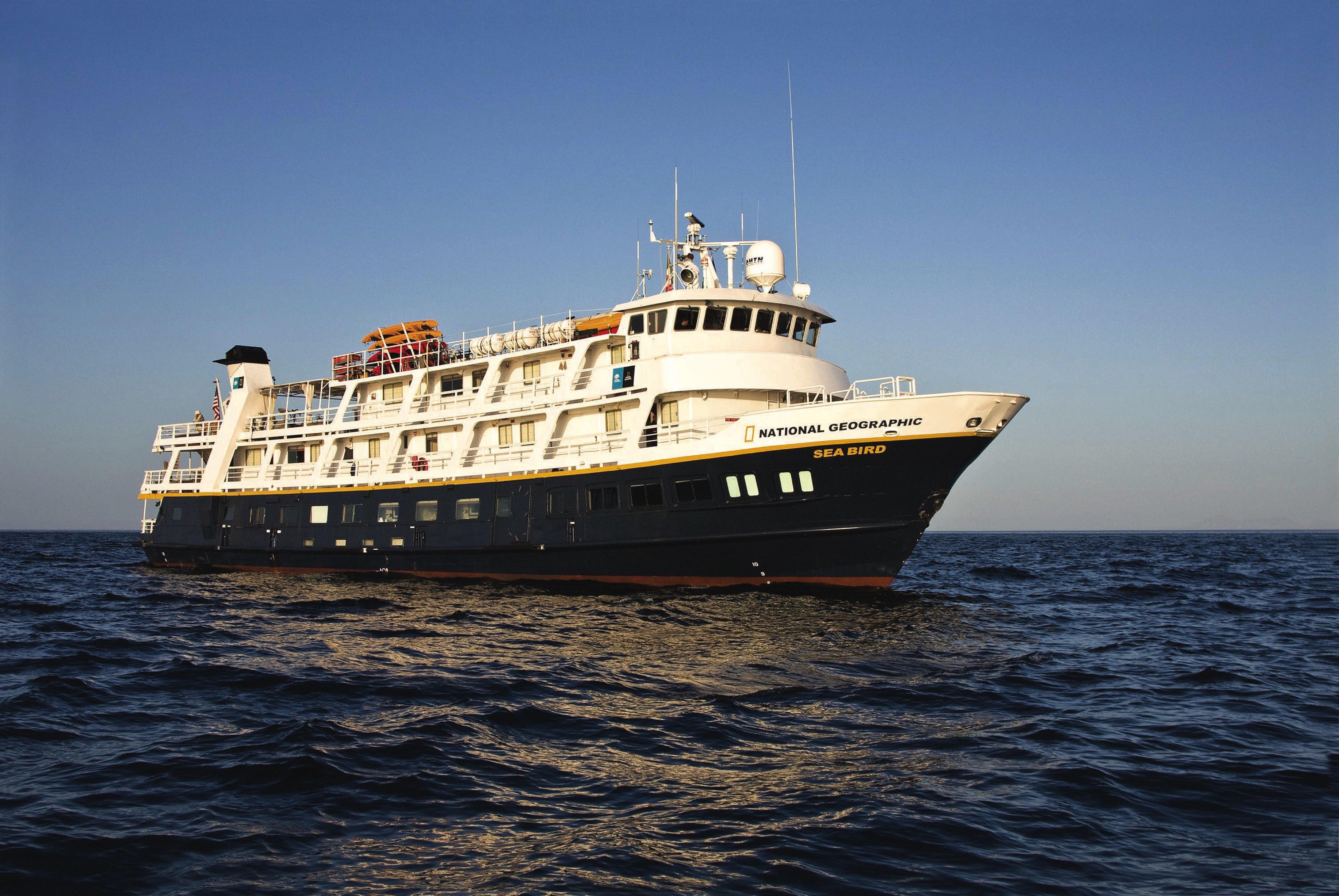

National Geographic Sea Bird
by National Geographic - Lindblad ExpeditionsBefore they built the National Geographic Venture and National Geographic Quest, U.S. shipbuilder Nichols Brothers built the twin ships National Geographic Sea Bird and National Geographic Sea Lion. Nimble, reliable and intimately scaled, they sail the waters of the west coast of North America and Central America.
Ship Facts
About National Geographic Sea Bird
Before they built the National Geographic Venture and National Geographic Quest, U.S. shipbuilder Nichols Brothers built the twin ships National Geographic Sea Bird and National Geographic Sea Lion. Nimble, reliable and intimately scaled, they sail the waters of the west coast of North America and Central America.
American-flagged, she and her sister, National Geographic Sea Lion, are ideal for discovering domestic waters
National Geographic Sea Bird accommodates just 62 guests in 31 outside cabins. Her inviting public spaces foster a sense of shipboard life where everyone is integral to the adventure, engendering a rewarding sense of community.
With a shallow draft and small size, she can easily reach places inaccessible to larger ships. She can venture into fast-moving channels where whales come to feed, transit a series of locks in the Pacific Northwest, nose up to waterfalls in secluded coves, and sail into protected anchorages in small bays perfect for snorkeling and kayaking.
Explore the wild in a fleet of six Zodiacs and 16 kayaks, as well as stand-up paddleboards.
Accommodation
Staterooms
National Geographic Sea Bird accommodates just 62 guests in 31 outside cabins.
Dining & Cuisine
Main Dining
Sampling local cuisine is a highlight of the onboard experience, and National Geographic-Lindblad Expeditions takes great care to bring the culinary riches of each destination to the meals you enjoy on board. Executive chefs design unique and innovative menus that feature modern takes on classic cuisine as well as essential dishes from the regions you visit, like paella in Spain or fresh udon in Japan.
Relationships with local farmers, vintners, and other purveyors enable you to enjoy immersive culinary experiences, both on board and onshore. In the Azores, pick fresh ingredients at a market guided by a local chef, or sample renowned wines in Bordeaux. Expeditions to the Galápagos Islands and the Pacific Northwest feature a sustainable farm-to-table dining program to incorporate the freshest ingredients into daily meals while supporting local agriculture and seafood industries.